How to Start a Business in UK as a Foreigner: A Step-by-Step Guide

So, you’ve got a killer business idea, and you are eyeing the British market? That is a fantastic move. The United Kingdom is one of the best places in the world to launch a startup, thanks to its stable economy and global connections. But, if you are not a citizen, the paperwork might seem a bit daunting. You are probably asking yourself: Is it actually possible to start a business in UK as a foreigner without getting tangled in red tape?
The short answer is: Yes, absolutely! You do not need to be a UK resident to set up a company there. However, there are specific steps you need to follow to ensure everything is legal and compliant. In this guide, we will walk you through exactly how to start a business in UK as a foreigner, from visas to bank accounts, while keeping things simple and stress-free.



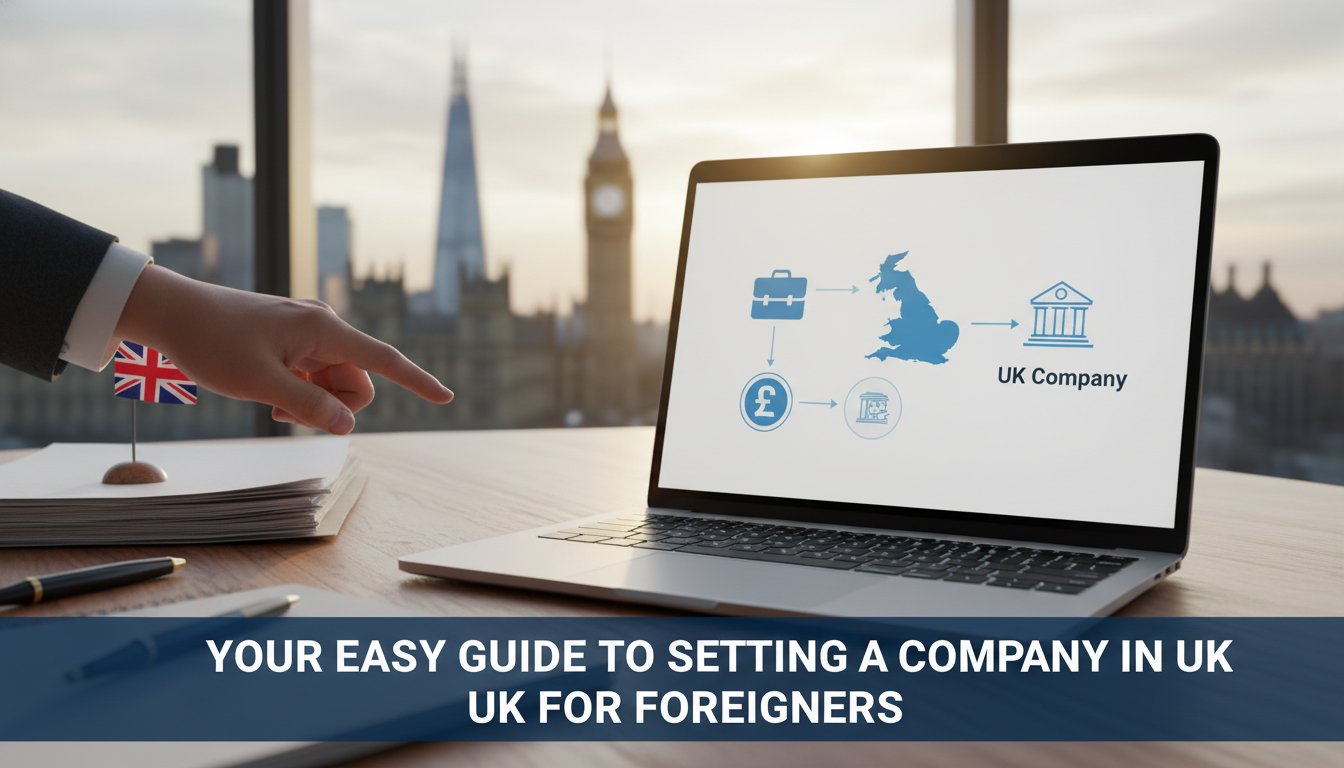

[IMAGE_PROMPT: Photorealistic image of a modern laptop open on a wooden desk in a cozy coffee shop, screen displaying a digital map of the United Kingdom with financial growth charts overlaid. In the background, through a window, a blurred view of a classic London street with a red telephone booth. Soft, natural lighting.]
1. Choose the Right Legal Structure
Before you do anything else, you need to decide what kind of business entity you want to form. For most non-residents looking to start a business in UK as a foreigner, the best option is a Private Limited Company (LTD).
Why? Because a Limited Company is a separate legal entity from you. This means:
- Your personal assets are protected.
- It creates a professional image for clients.
- It is tax-efficient.
While you could technically be a “Sole Trader,” this is usually reserved for UK residents because it requires you to be physically present and paying National Insurance. Sticking to a Limited Company is generally the smoother path for international entrepreneurs.
2. Do You Need a Visa?
This is the most common question. The answer depends on your goals:
- I want to run the business from my home country: You do not need a visa. You can form a UK company, be the director, and be the shareholder while living in Dubai, New York, or Singapore.
- I want to move to the UK to run the business: Yes, you will need a visa. You should look into the Innovator Founder Visa or the Global Talent Visa.
If you just want to start a business in UK as a foreigner to expand your global reach but stay where you are, you can skip the immigration lines entirely.
3. Get a Registered Office Address
Here is a strict rule: Your company must have a registered office address in the UK. This is where official mail from the government (Companies House and HMRC) will be sent.
“But I don’t live there!” I hear you say. Don’t worry. You do not need to rent an expensive physical office in downtown London. You can simply pay for a Virtual Office Service. There are hundreds of service providers that will let you use their address for registration and scan/email your post to you. This satisfies the legal requirement to start a business in UK as a foreigner without renting physical space.
4. Register with Companies House
Once you have your structure and address, it is time to make it official. You need to register your company with Companies House. This process is surprisingly fast—often taking less than 24 hours.
You will need to provide:
- Company Name: It must be unique.
- Director Details: You (and anyone else running the company).
- Shareholder Details: Who owns the company.
- Memorandum and Articles of Association: These are standard documents outlining how the company is run.
Most people use a “Company Formation Agent” to handle this. They charge a small fee but ensure you don’t make any mistakes when you start a business in UK as a foreigner.
[IMAGE_PROMPT: Photorealistic close-up of a confident person’s hand signing a business document with a high-end fountain pen. The document is on a glass table. In the background, a bright, modern co-working space with diverse professionals collaborating. Sunlight streaming in creates a hopeful, successful atmosphere.]
5. The Tricky Part: Opening a Business Bank Account
Here is where things can get a little bumpy. Traditional “high street” banks (like HSBC, Barclays, or Lloyds) are often very hesitant to open accounts for non-residents due to strict anti-money laundering laws. They might require you to visit a branch in person, which isn’t always convenient.
The Solution: Fintech.
Modern digital banking platforms are a lifesaver when you want to start a business in UK as a foreigner. Look into:
- Wise (formerly TransferWise): Excellent for international transfers.
- Revolut Business: Very business-friendly and easy to set up.
- Payoneer: Good for receiving payments.
These platforms usually accept UK Limited Companies with non-resident directors, making your financial setup much quicker.
6. Handle Your Taxes (HMRC)
Once your company is registered, you must register for Corporation Tax with HM Revenue and Customs (HMRC) within three months of starting business activities.
Even if you live abroad, your UK company pays tax on its UK profits. Currently, the Corporation Tax rate varies depending on profits, but it is generally competitive compared to other European nations. You will likely need a UK-based accountant to help you file these returns annually to ensure you stay compliant.
Conclusion
Launching a venture across borders might seem intimidating, but the UK system is designed to be open to international investment. By following these steps—securing a virtual address, registering as a Limited Company, and using digital banking—you can start a business in UK as a foreigner with relative ease.
The British market is waiting for you. Good luck!